Showing posts with label 2018 - Volume 11 - Issue 1. Show all posts

May 09, 2018

Empirically Aesthetic? MPI Researchers Weigh In

It's fascinating to read about big concepts like philosophy and beauty, but what is it like to study them in your daily job? Malika Renz sat down with researchers from the Max Planck Institute for Empirical Aesthetics to find out.

Pauline Larrouy-Maestri


Pauline Larrouy-Maestri, you have a very diverse background – can you tell us how you got into neuroaesthetics?
Yes, I studied music, psychology and pedagogy and worked as a musician and a speech therapist. My PhD was in cognitive psychology, on the singing voice which is of course linked to aesthetics. But aesthetics wasn't my main focus then – it's more of a means of looking at how people interact with their environment, at auditory perception and processing. I've been working on this as a post-doc here at the MPI for 3 years now.

How do you start with something as vague and mysterious as beauty and end up learning about perception and processing mechanisms?
Suppose you start with the question: what makes something beautiful? Is it the same as being somehow correct? Or interesting? Recently, we've been working on pitch accuracy, so let's take that as an example. Beautiful singing voices or melodies are often associated with being "correct". Everyone can hear if a performance is in or out of tune – musicians, non-musicians, male, female, young and old – people usually agree on this. So what is it that makes all of us feel that one tone is correct and the other is not? It's hard to put a label on this, it just sounds right or wrong. Somehow, people must become sensitive to the criteria for a correct melody without ever being aware of it! And we know this holds true not only for music but also for other domains – we learn rules and we apply them to make an aesthetic judgment without even noticing.

But if we don't even notice it – how are we learning those rules?
The brain is made for taking in stimuli and building rules, and thus knowledge from it. It's similar to how children learn a language, a totally implicit process. To understand language you have to parse the auditory signal – you need to cut it into sensible units and concatenate them in a meaningful way. The same parsing and integrating of course happens in music appreciation as well and it is this process which I am interested in. Aesthetics is my vehicle to study how we learn auditory processing, what the minimal units and the rules of meaningful integration are.

How can you research music appreciation in the lab?
Me, I am doing psychophysics: I manipulate stimuli, I invite people to the lab and ask them to listen to these stimuli. We change single features of tones and ask something like Which of these sounds is more in tune?. The resulting data can tell us what differences are perceived and what magnitude of change is needed. That alone reveals a lot about the structure of sounds, its components and their relative importance. This was how we found out that the smallest meaningful units are not single notes –  it's the beginning and the end of a a note that matters. Once you find these units and confirm their discerning value, you can play with them: find out how the changes influence the perceived agreeableness or pitch accuracy. And whether people even agree on the direction of effect of a specific parameter.

Pardon my impoliteness, but apart from being fascinating, what use is there in all this?
Aesthetic appreciation of course is very fundamental. Many things are related to what you see and hear, all around you. Interaction with people is about tastes, preferences, about your appreciation of the environment. We all function with that all the time. But we don't understand the processes behind it very well: we know that the pleasure circuitry is based on automatic processes. For perceiving something as beautiful, however, indirect pathways, such as mediation by thought, are needed. Simply knowing how perception works has a clinical application. If someone has a speech impairment or a difficulty to understand language, is it because they cannot parse? Cannot concatenate? Didn't learn the appropriate rules? As soon as we have a working model we can tick which box is malfunctioning and focus training or treatment there.

To save the best for last: what was your personal research highlight?
I showed that we are all musicians. Let me explain. For decades, we had in the scientific literature a separation between musicians and non-musicians. It is categorical, but the idea has been around for a while – and it's nonsense! Take an opera performance. Who goes to the opera? No one does! Only a very small part of the general population, mostly educated people with a musical background or interest. And musicians agree to a very great extent on their judgment of what makes a beautiful opera voice. But here is what I found: people who have no idea what an opera voice is or should be apply the same criteria and come to the same conclusions. So, without ever going to the opera, without any explicit input, we build a representation that creates a link – between you and me, between people who are privileged enough to enjoy operas and those who aren't. Our learning mechanisms are fundamentally the same and they take whatever they can get from the environment.


 The interview was conducted by Malika Renz, MSc Student MedNeuro

May 07, 2018

Does Beauty Lie in the Face?

As the saying goes, ‘beauty is only skin-deep’. However, many times we cannot help but fall for an attractive face: the first impressions of a person do create an impact on our minds. What is considered ‘beautiful’? Are there features of faces across cultures that people find more attractive?

Facial Symmetry
According to researchers, a face is perceived as beautiful if it is symmetrical and represents the average traits of the population. Our eyes recognize symmetrical faces with similar proportions on left and right side of the face. The quest to define a golden standard for a facial feature - for example, the size or shape of the eyes or lips - dates back to antiquity. The Ancient Greeks believed that the essence of beauty lied in the golden ratio of 1:1.618. More recently, researchers have discovered that people find a female face attractive when the distance between the eyes is just under half of the width of the face. They also found that the eye-to-mouth distance should be just over one-third of the height of the face. These two ratios have been termed as the ‘golden ratios’, which correspond to that of an average face [1].

An external file that holds a picture, illustration, etc.
Object name is nihms164846f1.jpg
Example of faces with different length and width ratios. Boxes mark the optimal length and width ratios that people found attractive [1].
 

What is the reason behind the choice of such features? This can be explained by two existing theories: one is an evolutionary aspect where humans tend to choose healthy mates with physical characteristics resembling the average population. The other is a cognitive aspect where, due to repeated exposures, we tend to prefer prototypical facial features which are easier to process.

Golden ratio: can beauty be quantified? 

So, are facial preferences based on nature or nurture? Do we have a preference for certain faces as babies? The answer seems to be: yes! Babies of 2-3 months tend to look at attractive faces for longer time than unattractive ones [2]. The perception of attractiveness is also affected by familiarity: Hazda people, hunter-gatherers from Tanzania who have not been exposed to European faces, found the average face of a Hazda more attractive than an European face [3]. But spatial aspects of the face are not the only determinants of attractiveness - sexually dimorphic features like full lips and longer eyelashes also influence what people find attractive [1 ].

The Power of a Smile
A smile has more powerful influence on people’s perception than facial features or makeup, according to psychologists. People with genuine smiles were seen as healthier and more attractive by virtue of being optimistic and cheerful than people with blank expressions [4,5]. Thus, the secret to healthy appearance and being attractive? Smile!
For the evolutionary basis of beauty, check out Helge's article on page 5. Given the fact that there is an innate bias inside all of us towards 'beautiful' faces, it is even more important for us to think twice before making judgements on other people based just on their appearances!


How an average American woman will look like in 50 years
(Courtesy: National Geographic)


What will future humans look like?
It has been predicted that globalization, cultural diffusion and interracial marriages will eventually homogenize the human population, averaging out more and more people's traits such as hair, eye color, facial features, and eye shape. Dominant traits will be expressed more than recessive traits (which need not one but two copies of the gene to be expressed). In other words, we are going to become a huge amalgamated race!


by Aarti Swaminathan, PhD Student AG Schmitz

 [1] Pallett P.M, Link S, and Lee K. Vision Res. 2010.
 [2] Hoss R.A. and Langlois J.H. The Development of Face Processing in Infancy and Early Childhood: Current Perspectives. 2003.
 [3] Apicella C.L et al. Perception, 2007.
 [4] Golle et al. Cognition and Emotion, 2013
 [5] Jones A.L et al. Visual Cognition, 2017.

May 04, 2018

The Weird and Wonderful World of Body Modifications

Body modification is the deliberate alteration of one's physical appearance. It is the wilful action that produces a permanent or semi-permanent modification to the body that is not normally found in nature. 

In the last 30 years, body modifications have experienced a resurgence and increase in popularity, spanning a wider range of social classes and including a long list of practices. From the simple haircut and earrings to the piercing of lips, nipples and genitals, from eyeball bleaching to subdermal horns or bars, or implantation of bio-polymers to augment the size of breast and buttocks; from anabolic steroid injections for bodybuilding, to extreme fasting- all are examples of altering one's appearance over time [1]. Importantly, many of these practices are no longer related to cultural traditions and have become commercialized and legitimized by society. They are especially influenced by media that dictates the current ideals of beauty and fashion. The perception of beauty and morphing the body to obtain it, however, has evolved over time; and with it have also evolved the techniques and tastes for how to modify the body [2].

A Brief History of Body Modifications
History abounds with examples of body modification. Culturally imposed body alterations have been performed for centuries with strong religious or socio-economical belief. The aristocratic class of Mayan civilisation used to compress the skulls of new born babies. Their cranium would be elongated into a shape believed to resemble that of the gods. In China, the feet of young girls were bound together tightly to reshape them into petit stubs to mimic a lotus flower. These women could hardly walk or work, and as such belonged to the privileged high-classes. Many other cultures, from Japan to the islands of Samoa, have empowered their sense of tribal community by tattooing their bodies and faces with symbols of affiliation. While many of these practices were supposed to enhance beauty or infuse power to the beholder, other alteration included the forceful branding, tattooing or scarification of slaves and war prisoners to symbolise their diminished identity or their status as objectified property [3].
While many of these practices have disappeared, other dehumanising and disfiguring operations, such as female genital mutilation, are still conducted to date. Although all the above examples can be considered forms of body modifications, today the term encompasses a different and largely less harmful set of transformative practices.

A collection of bodymodifications, source: Wikimedia Commons


What Drives Body Modification Today?
The definition of body modification today is based firstly on the concept of voluntarism. It is a practice undertaken by active subjects, often after long consideration of the results and side effects. A second distinction must also be made between voluntary body modification and that due to medical purposes. These include all operations that are required and performed by the medical establishment. Prosthetic fittings, gender reassignment and cosmetic surgery, therefore, while broadly falling under the idea of a physical modification, should not be considered as such [4].

Tattoos and piercings: a style statement
 
Body modification, according to the community that endorses and promotes it today, means piercing, tattooing and cutting - in its extreme forms. Simply piercing one's ears is considered ornamental rather than transformative. Bearers of body modifications sit through hours of excruciatingly painful procedures to obtain what they want. The reasons behind extensive remodelling of the self have been the subject of much investigation - and are, indeed, most fascinating to understand from a psychological point of view. A sense of belonging to subcultural or religious groups or a demonstration of resistance against society are strong motivations driving body alteration. However, the primary force driving the desire to modify some part of the body is embellishment. The transformation is seen as a work of art, a novel quality that renders one more beautiful. Through this piece, the bearer also establishes their identity. They are special and exhibit their distinctive and unique trait to prove it. Reshaping some part of the body may also involve an act of catharsis: either to forget something or to never forget it, and it becomes part of one´s personal narrative of life. The pain felt during the actual operations is another common reason to undergo transformative operations. Testing one's limit, enduring the hardness, feeling the endorphins rush: all generate a sense of pleasure and reward alongside the physical pain, and a potential sense of atonement. Finally, reckless impulsivity also often leads to body modification [5]. But would you not regret waking up with the Chinese symbol for ‘soup’ tattooed on your arm?

Body Modification of the Future?
Body modification today is enjoying a rise in popularity, promoted by tattoo conferences and websites dedicated exclusively to body alteration (for those adventurous, check out BME.com). But what could be the body modifications of the future? Some college students are experimenting with subdermal implants of magnets to perceive the energy fields of metal objects - a sort of sixth sense [6]. But while the power to feel when a mobile phone is charged might be more useful than attractive, will the body modification community accept other forms of aesthetic transformation or enhancement? For example those that could be moulded by genetic modification? It's a brave new world.

by Maria Lucia Pigazzini, PhD Student AG Kirstein

[1] Featherstone, Body and Society, 1999
[2] Adams, Sociologial Prespectives, 2009
[3] Rubin, Marks of civilization, 1988
[4] Lane, Sociology Compass, 2017
[5] Wohlrab et al., Body Image, 2007
[6] Wired Gear http://bit.ly/2soFHnh, 2006

May 02, 2018

How Stress Gets Under Your Skin

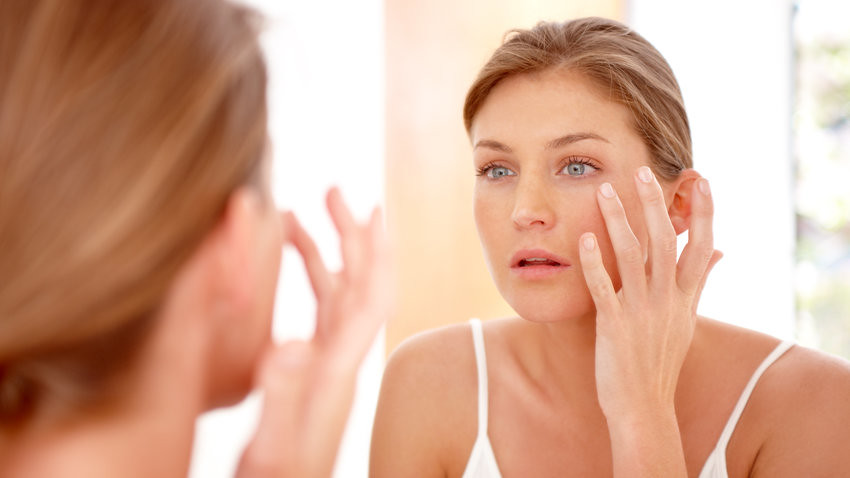
With two square meters surface and 3.6 kg weight, the skin is the largest organ of the human body [1]. As first human organ to develop it represents the first line of communication within the womb. Some experts even call it the “social organ”. Culturally, skin defines our social standard of beauty. Youthful and smooth skin signals health and vitality [2].

The social pressure to be beautiful is used by global skincare markets, which make up a $121 billion industry [3]. According to the American Society of Plastic Surgeons, around 15 million cosmetic procedures were performed in the United States in 2013, 13.4 million of which being minimally invasive including Botox injections and chemical peels [4], with experts predicting an upward trend for the future [5]. Out of all the money spent for beauty, skin products are at the top. Beauty-wise our skin seems to be the most valuable organ to us. After all, it is the first thing people see.

The Deeper Reasons for Skin Problems
Let’s face it! We are skincare addicts. We love the idea that we can just apply aloe vera, jojoba and some Q10 and look young and fresh. We may not know what these ingredients actually do or where they come from, but if the package says it’s anti-aging, it’s worth a try. These products, however, rather treat the symptoms than the cause. We elegantly overlook in our everyday lives that there are causes to our (skin) problems that we could treat if only we cared to look a bit deeper.
During embryonic development, skin cells and cells of the nervous system develop from the same embryonic tissue, the ectoderm [6]. The strong connection between brain and skin is thus not surprising. If you have ever blushed from embarrassment or itched from agitation, you’ve experienced a typical phenotype of the brain-skin-interaction.
A huge contributor of skin problems and diseases is chronic psychological stress. Contrary to common belief, your stress system is absolutely necessary and extremely beneficial to your health. It ensures survival in the face of danger. However, problems start occurring when this system is activated over a long period of time and stress has become chronic [7]. There are several ways in which chronic stress can influence your skin.

via flickr

Stress changes eating habits. Stress causes "emotional eating", which refers to eating high-carbohydrate, high-calorie foods with low nutritional value due to emotional stress. Such a diet can lead to acne and impure skin [8].

Stress reduces blood circulation in the skin. During stress, blood accumulates in vital organs providing them with oxygen and energy to allow the body a quick reaction to the stressor. As the skin is not life-saving in most threatening situations, it is less well irrigated and dries out quicker, making it dull and rough [9].

The negative effects of cortisol. Cortisol levels normally undergo daily oscillation with peak level in the early morning and lowest level around midnight. Under stress, these oscillations are impaired and significantly up-regulated cortisol reduces anti-inflammatory processes in the skin [10]. Furthermore, cortisol increases the skin’s oil production, which can exacerbate acne. Cortisol also inhibits the production of melatonin, a hormone important for the sleep-wake-cycle and a potential effective anti-skin aging compound [11].

Stress causes an increase in free radicals. Free radicals in high quantities attack the healthy skin cells and destroy their membrane. These cells quickly die, leading to saggy, wrinkly skin and more dark spots [11].

Stress speeds up the ageing process. Not only does stress and worrying provoke wrinkle causing facial expressions like frowning [9]. It also increases cortisol, which degrades collagen (for skin strength) and elastin fibers (for skin elasticity).

Skin conditions. Stress can also aggravate precedent skin disorders such as atopic dermatitis, herpes simplex, pruritus (itching) or psoriasis. Many people who suffer from chronic skin disorders report that their symptoms flare up when their stress levels are elevated [6].

The vicious cycle. The stress-related skin conditions can in turn cause psychological distress feeding in a vicious cycle of psychological stress and skin problems. It can be extremely difficult for affected people to break out of this cycle.

The brain and the skin are strongly connected

This is a lot of bad news for your skin. Does this mean everyone battling with blemished skin or wrinkles needs a therapist? Of course not. Not every skin problem or disease is necessarily stress-related. And there is an obvious flipside to all of this: positive experiences can be beneficial for your skin. An example of this is the famous “love glow”, which is the skin’s response to the release of oxytocin in the brain. Oxytocin is involved in social bonding such as between sexual partners or a mother and her child. It creates a feeling of deep attachment. Oxytocin is thought to reduce the body’s production of cortisol and inflammatory processes in the body that slow healing [12]. More oxytocin potentially leads to fewer skin irritation and may thereby promote the “love glow”.
It is important to recognize these strong interconnections between your brain and your skin, between your internal and external world. Keep in mind that any positive as well as any negative experiences can (quite literally) get under your skin.

By Alena Deuerlein, MSc Student Psychology/Interdisciplinary Neurosciences
Goethe University Frankfurt


[1] http://bit.ly/2nTUkuh
[2] http://bit.ly/2EgUy93
[3] http://prn.to/2B0PST4
[4] http://bit.ly/2EjfBYw
[5] http://bit.ly/2EUBr1y
[6] Shenefelt, Psychol Res Behav Manag, 2010; PMCID:PMC3218765
[7] Anderson, Ann N Y Acad Sci, 1998
[8] http://bit.ly/2G1wAuT
[9] http://bit.ly/2H2H12t
[10] Chen and Lyga, Inflamm Allergy Drug Targets, 2014; PMCID:PMC4082169
[11] Kleszczynski and Fischer, Dermatoendocrinol, 2012; DOI:10.4161/derm.22344[12] http://bit.ly/2EkrIEF

April 18, 2018

Finding a Career Entry That Suits You - Part II

With far fewer academic positions available than there are people with PhDs, the traditional path from student to postdoc to professor is no longer the norm. But besides that, there are many reasons why you might want to leave academia. Maybe you want a more secure job, want to get in contact with clients, or just don't like research anymore. Luckily, there are more jobs out there than you might realize! The process of job hunting can be confusing and intimidating. This collection of tips will help you to identify your strengths and the industry you want to move into and finally find a career entry that fits your interests.

Where can I get insights into specific positions?
We all know former lab members or fellow students who have moved on to non-academic careers. Ask them what they do now, if they are happy, and what kind of additional qualifications they had, suggests career coach Ulrike Schneeberg (http://deinemonster.de/), whom I met last year at a career day organized by the FU in Dahlem.
Job shadowing is also a great opportunity to find out if a job will suit you. Some universities offer programs, but you can as well just ask your acquaintances who work in a job you would like to get to know better. If you are eager and self-confident, you can also directly contact companies; it will for sure make a good impression. If you are about to graduate, do not cancel your studentship just yet: companies prefer to give away internships to students than to recent-graduates.

How do I get familiar with the job lingo?
Online job portals will help you figure out what names the jobs have and what specific skills are listed for the different job titles.
Check the job descriptions of your networking contacts and contact those whose job descriptions sound interesting to you. Most people are happy to report about their job and how they got there. Reach out to people in different jobs, ask if you could meet them for a coffee to ask career questions or interview them for a few minutes on the phone. I can personally report that it is incredibly helpful to get some inside information.

Do I have the right skills?
Browse through job offers and carefully read the descriptions. Ask yourself if you have the essential qualifications. If not, what could you do to gain additional expertise? Maybe you can join a project from a befriended lab, or take a course at your university or online while finishing your degree? However, don’t let the lists of desired skills intimidate you. Most employers are open for applicants who do not have a final degree that exactly matches the industrial sector or job opening if the application is convincing.

How do I structure my job search?
Career coach Ulrike Schneeberg suggests making a timeline to structure your job hunt efficiently. For example: by the end of next month you should have interviewed five people with jobs that sound interesting. Upon completion, reflect if your view has changed and eventually schedule another round of browsing job options and setting up informational interviews. Then narrow your career options down to a few choices that align best with your skills and interests. Having completed this step, it makes sense to start writing your resume, CV and parts of a cover letter tailored to the specific positions and industry. This is a very crucial step - take your time and go over it several times. Show them to your friends and colleagues (maybe even to this person who holds your dream job). Some applications may require references; ask your supervisors early enough if they would be willing to write you a recommendation letter. Most of the time they will be happy to do so, but won’t have much time. In this case, draft a reference yourself, so your referee will only need to edit and update it.

How do I get the attention of prospect employers?
Tell your friends and colleagues that you are looking for a new job. This will increase the likelihood of being offered a position which is not on the public market.
At career fairs, you can get directly in contact with recruitment managers. If you make a good impression and give them your contact detail, you are already one step closer to your dream job.
According to recruiting managers, it is highly recommended to participate in online job portals. More and more companies follow the trend to search suitable candidates themselves or work with recruiting agencies. If you want to be found, make sure to include the right buzzwords in your profile.

Where do I find job adverts?
Most companies advertise their openings online. The biggest resources are LinkedIn (for the international job search), Xing (the most important platform in Germany) and Indeed, but don’t forget to check out more local portals and those specific to the sector you are looking at, such as yourfirm, jobmehappy, jobworld.de, or stepstone.
However, also check out individual company homepages, as not all openings are shared in online job portals. Interestingly, many small- and medium-sized businesses still advertise in print media. Thus getting a copy of your local newspaper might be a good idea as well.
A great resource are also Laborjournal, academics, duz wissenschaftskarriere, Science Jobs DE, Sci-Tec Career, and Wila Bonn. Those looking for international jobs, will find interesting job offers at Science Careers and Naturejobs.

Where do I get information about prospect employers?
Always use more than one source: the company webpage, press releases, social media and rating portals such as glassdoor or kununu. Also check whether local and/or daily news reported about the companies you are interested in. If you want to move into the biotech scene, you should definitely check out labiotech.eu. The different pieces of information will help you to shape an image of the company. Ideal would be if you could talk to current or former employees. This is possible at career fairs or by directly contacting employees.

Where can I get help?
A very helpful tool is the “individual development plan” from science careers. You may also get help from your university. Charité students may contact the stud-hotline@charite.de to get career advice, even after completion of studies. For students enrolled at the Humboldt University, these links might be helpful (http://bit.ly/2E7bMFU , http://bit.ly/2BMLjLW) and you can also attend their events even after you graduated. There are also many helpful events organized by the Agentur für Arbeit. If you are looking for individual help, I can recommend to meet with a career coach. And stay tuned for the new Career Development Program for Berlin Neuroscience graduate students, currently being developed by SPARK with the help of MedNeuro students!
Get in touch with recruitment agencies specific for the sector you want to move into. Generally their services are free of charge for the job seeker and they have a genuine interest to get you a position because they will be paid by the companies upon success. Furthermore, recruitment agencies have a great portfolio of companies, you might not be aware of.

We wish you all the best!
Let us know your career stories, so we can help future graduates to smoothly transition into their first positions!

by Claudia Willmes, PhD Alumna, AG Eickholt / AG Schmitz
This article originally appeared March 2018, in Beauty and the Brain , Vol 11 - Issue 01

April 16, 2018

Finding a Career Entry That Suits You - Part I

With far fewer academic positions available than there are people with PhDs, the traditional path from student to postdoc to professor is no longer the norm. But besides that, there are many reasons why you might want to leave academia. Maybe you want a more secure job, want to get in contact with clients, or just don't like research anymore. Luckily, there are more jobs out there than you might realize! The process of job hunting can be confusing and intimidating. This collection of tips will help you to identify your strengths and the industry you want to move into and finally find a career entry that fits your interests.

How do I start?
The most important building block for a successful career is to be honest in defining your interests and strengths. The first question should be: do I want to apply for jobs in a technical, creative or management sector? But don’t build up too much pressure: you don’t have to make the perfect decision. A career is a path that arises from many decisions. Of course, the first job sets the direction, but you can always transition to another position. Especially when looking for your first "real world job", you might need to compromise on one or two things.

Where can I get inspiration?
Use conferences, social events, career fairs, meet-ups and career talks to question others about their work and explore the realities of these possibilities. A great opportunity to get in touch with scientists working outside of academia is the Career Development Seminar every second Wednesday at noon in the CCO Auditorium. Find people with a similar academic background who share your view on life and ask them about their careers. You might not only get inspired but also make important contacts. Even getting to know what you don't like will shape your idea of what you might want to do.
Think outside the box: scientists are not only needed in science but also in jobs like consulting, the public sector, non-profit organizations, management, communication, and many more. There are plenty reports from scientists that escaped academia on Science, Nature and Reddit.
Reflect when you read advertisements in newspapers or scientific journals: why were you attracted to this advertisement? Could you imagine working for this company or in this sector?

What are my strengths?
Pinpoint moments when you really enjoyed or really didn’t enjoy doing something, instead of trying to imagine what you would enjoy doing, because a lot of things aren’t what they seem to be. Find out what you are good at by asking yourself “what do people ask me to help them with?”. Ask people around you what you are good at and what they think is special about you. Consider also your life beyond the lab and think about your strengths outside of your field of study.

What are my interests?
Maybe you are graduating in neuroscience, but you have always been attracted by nutrition science, or you are more interested in the bigger picture of science - all this is worth considering. Only if your career satisfies your interests, will it make you happy. Figure out what it is that drives you. Think about moments when you were really happy, inspired or content with what you were doing.

What is important to me?
Consider what is important to you and prioritize. This might be the work environment, career perspectives within a company, working hours, the salary, or additional benefits. Make sure your prospect job fits your lifestyle and incorporates your personal life plan. If you want kids and would like to take a break from work, would this be compatible with the career aspired to? Do you want to stay in this city or are you willing to relocate? Can you commit to a job that needs a lot of traveling or working on the weekends? Do you want to work in a highly competitive environment? Answering these questions will help you to further narrow down career options.

stay tuned for Part II : Everything from getting familiar with the job lingo, structuring your job search, and where to get further information

By Claudia Willmes, PhD Alumna AG Eickholt / AG Schmitz
This article originally appeared March 2018, in Beauty and the Brain , Vol 11 - Issue 01

April 13, 2018

Science Gender Equality in Germany: Soapbox Science Berlin

In recent years, we got used to seeing movies where scientists have become no less than superheros, saving humanity from natural disasters and alien invasions. Whether it is the super engineer Tony Stark (Iron Man) or the nuclear physicist Bruce Banner (The Incredible Hulk), scientists are usually portrayed by males who lead their teams to that great discovery or solution that will ensure the survival of the human species. Is it any coincidence that studies have shown that children aged 5 to 11 tend to draw scientists as men, not women [1]? 
 Only 30.9% of German scientists are women
In part, this gender stereotyping seems to be promoting the (incorrect!) reasoning that professions requiring higher cognitive abilities and problem-solving skills (like the scientific ones) are not for girls. Accordingly, recent research has demonstrated that girls as young as 6 tend to divert from novel games said to be for bright children, as they see ‘genius’ and ‘excellence’ as male traits [3]. Further, the number of women scientists holding a PhD in academic disciplines believed to require higher levels of ‘brilliance’ (e.g. physics, math, philosophy) is lower than the number of men [4].


Rain or Shine, Female Scientists Are Here to Stay!
As an attempt to overcome these implicit biases instigated by gender inequality in the scientific world, Nathalie Pettorelli and Seirian Sumner (ZSL and UCL, respectively) founded the Soapbox Science platform, an initiative that gives visibility to women scientists through open-air public events that foster scientific discussion and public learning. On June 4th 2017, Berlin hosted its first Soapbox Science event at the Tempelhofer Feld. Twelve female scientists from all over Germany took part of the Soapbox Science Berlin (SSB) 2017 and talked about the science they do in the fields of psychology, biology or engineering. Despite unexpected rain and wind, the first Germany-based Soapbox Science event had over 150 participants from different nationalities and educational backgrounds, whose contribution enabled a dynamic exchange of ideas between female scientists and the public. 
 SSB promotes science gender equality in Germany
Yet, the lively scientific discussions and the number of participants were not the only predictors of this Soapbox Science event success – the Berlin team was invited to organize another event as part of the Berlin Science Week 2017. This second event took place at the Sony Center, Potsdamer Platz and brought together 8 women scientists from various research areas: biomaterials, neuroscience, ecology and biomedicine. This time, 256 participants (12 to 89 years) craving for scientific knowledge showed up. Given the goal of eliminating the biased generalization that only boys can be scientists, the Berlin team invited high school students to attend the event with the objective of empowering teenagers of both genders to pursue scientific careers.


What's Next for the Team
After two amazing and successful events, the SSB team is preparing for the next happening and for further integrating the Berlin team into the worldwide network of Soapbox Science summer initiatives. Join the 2018 speakers in Berlin, June 1st (from 2 to 5pm; location TBD) and challenge your scientific knowledge with some sun and fun! Besides promoting science gender equality, the SSB team hopes to broaden girls’ views about their future career choices and increase the number of German women scientists. Even though the proportion of female researchers in Germany has already increased from 28.2% in 2010 to 30.9% in 2014 [5], the gender gap is far from being closed. Soapbox Science Berlin aims to close the gap and empower young girls to be the scientists of tomorrow.


by Ana I. Faustino, Postdoc AG Judkewitz
Former Soapbox Science Berlin Co-head

Want to find out more? Get in touch with us!
Twitter: @berlin_soapbox
Email: soapboxscience.berlin@gmail.com

[1] Chambers, Sci. Educ., 1983
[2] Mead and Metraux, Science, 1957
[3] Bian et al., Science, 2017
[4] Leslie et al., Science, 2015

March 28, 2018

Beauty and the Art of Perception

Confucius once said wisely “Everything has beauty but not everyone sees it”. It is interesting how Confucius thought beauty is perceived: with the eyes. What are people's most common answers when asked about what beauty means to them? 

Initially, they think about physical attributes, especially of other humans. This probably is a consequence of the media’s focus on what a perfect body or face should look like. This especially seems to resonate with teenagers. Ideally, the older you get, the more beauty is also seen in subtle and, as many would probably agree, more valuable things of life. Beauty can mean a warm hot chocolate after a full day of skiing, the rewarding view from the top of a mountain after an energy-sapping five-hour hike or merely the joy a mother feels when she sees her child smile at her while going crazy on a trampoline. Beauty is conveyed by all different modes of perception: looking at something, but also touching, tasting or listening to it.

The “Aesthetic System”
In the early phase, research in neuroaesthetics restricted itself to visual perception. For example, scientists tried to assess the physical properties of human faces in order to find the basic neural mechanisms underlying our brain's decision that something is beautiful [1, 2]. Key features are average, symmetry and hormones. The first factor that contributes to beauty is average, because it harbors greater genetic diversity and adaptability to the environment. The second factor is symmetry, because developmental abnormalities are often associated with asymmetry, while symmetry is an indicator for health. And the third factor are hormones, because high level of estrogen and testosterone play important roles in shaping features that people find attractive (when we confine ourselves to heterosexual norms).
Picture: By Hector Salazar

I personally think that these features are what describes attractiveness and are partly evolutionary pre-determinations of how we subconsciously choose our life partners. Anyway, let us have a look what happens in the brain: Attractive faces activate a network of areas that range from the back of our brain to the frontal lobes. An area called fusiform gyrus, which is part of our visual cortex and temporal lobe, as well as the lateral occipital complex in the back of the brain are activated. The fusiform gyrus is especially attuned to process faces, while the occipital complex is especially attuned to process objects. In addition, attractive faces activate parts of our reward and pleasure center located in the front and deep in the brain. These areas are the ventral striatum, the orbifrontal cortex and the ventromedial prefrontal cortex [3].
Beauty is in the brain of the beholder
Since the field of neuroaesthetics is a new but rapidly expanding area, recent studies cover also other art forms, like music and performing art [4], as well as other senses, like smell, taste, hearing and touch. One consistently activated region in response to beautiful stimuli in neuroimaging studies was the anterior insula [5]. This small neural area that sits deep within the lateral sulcus of the cerebral cortex is implicated in a wide range of subjective feelings based on interoception, from cigarette craving to maternal love and, as the term interoception implies, integrates bodily sensations. Since tasting a favorite meal, listening to Beethoven’s Symphony No. 9 or looking at visually appealing art have all effects on the body, it is not surprising that a region that is meant to give feedback on how much an experience satisfies the physiological needs can also be part of an “aesthetic system” in the brain.

Things that Matter
Interestingly, the sense of beauty seems to require activation in the brain’s reward system. Thus, the brain’s output is a pleased feeling that we sense when we perceive beauty. Sadly, we choose quite often to be blind to beauty because of distraction, worry and daily stress. But it would be very beneficial for each of us to actively predispose ourselves to embrace beauty. Whatever it means for the individual, beauty means happiness at the end. And the good thing is, you decide what’s beautiful, because - if you allow me to adjust the popular saying - beauty is in the brain of the beholder.


[1] Rhodes, Annu. Rev. Psychol., 2006
[2] http://bit.ly/2lYvDJe
[3] Kocsor et. al, Socioaffect Neurosci Psychol, 2013
[4] Cinzia & Vittorio,Curr Opin Neurobiol, 2009
[5] http://bit.ly/2lYvDJe

by Anahita Poshtiban, PhD Student, AG Plested
This article originally appeared March 2018 in Vol 11, Issue 01, "Beauty and the Brain"

March 23, 2018

New Issue Out Now: BEAUTY AND THE BRAIN


The brain is beautiful. From single cells to the sulci and gyri on an MRI, there is a lot to admire. In this issue of the newsletter, we dive into neuroaesthetics, an exciting field studying how beauty is created, understood and valued by the brain. To start things off, why not take a short primer course (page 3), or hear about it straight from the source: scientists working at the Max Planck Institute for Empirical Aesthetics (pages 8-11)? We also take a look at whether beauty is only skin-deep literally (pages 15 and 17) and figuratively (pages 13 and 18-19), and how a pretty face (or not…) impacts your chances in life and academia (pages 5 and 12). Do art and beauty always go hand in hand (pages 16-17 and 20)? What if drugs get into the mixture (page 21)?

As part of a recent scientific writing workshop, we are trying to give the newsletter a ‘makeover’. For this purpose we want to hear from YOU, dear readers! See our survey on the next page, give us your best elevator pitch (page 21) or get involved with writing or editing. On this note, a huge shout-out to new author Nina Stöberl, whose story on page 14 and beautiful image of the neuromuscular junction provided our cover art! Most importantly, we want to cover more topics that are directly relevant to our audience, to that end check out our great front-line reporting and critique on Charité PhD life (pages 22-24).

This issue, we are excited to welcome four new members of our proofreading and editorial team: Bettina Schmerl, Aarti Swaminathan, Malika Renz and Zara Khan. Unfortunately, we also have some sad news as well: Helge, one of co-editors-in-chief is about to finish his PhD, and will transition into the exciting and glamorous world of consulting. Thanks for everything Helge, and thanks for all of your hard work for the newsletter! Replacing Helge and joining Constance as the new EIC is Claudia Willmes, an alumna of AG Eickholt and Schmitz and current editor of our blog. We look forward to working with Claudia and expanding our presence both on the web and the written page.
Beautifully yours,

Constance Holman & Helge Hasselmann co-editors-in-chief

Access the full issue here.